
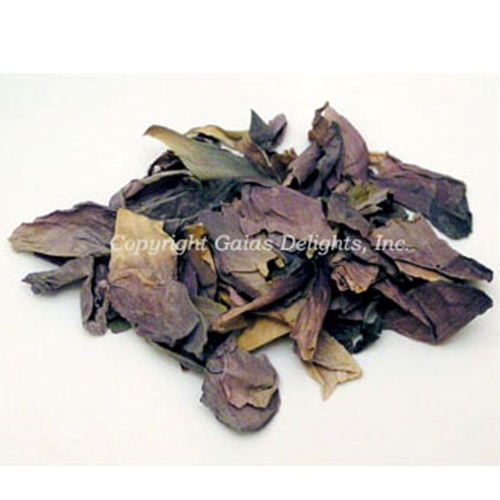
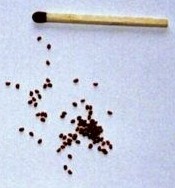
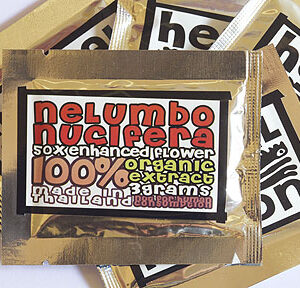
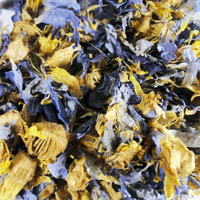
These are WHOLE organic blue lotus flower petals, hand-picked from a single pond, on a small farm in Nepal. The sacred blue lotus flower (Nelumbo nucifera) has become etched in folklore because of a fabulous people who supposedly occupied the north coast of Africa and lived on the lotus. The sacred lotus flower was also what the Ulysses’ crew smoked after coming ashore following years at sea.
Sacred blue lotus contains lotusine, demethyl coclaurine, neferine, and nuciferine.
Some believe that the lotus came to India from Egypt. Later, Buddhism borrowed the flower from Hinduism. In Buddhist painting and sculpture, whenever Buddha is shown delivering an important sermon, he is shown sitting on a lotus pedestal. Buddhist scriptures enumerate fragrance, purity, delicateness and beauty as the attributes of lotus.
The lotus is one of the world’s most celebrated flowers. From time immemorial to the present day, it has always been found in folklore, religion and the arts in one form or the other. The term lotus is applied in general to several species of plants. About 100 lotus species are found in temperate regions of Asia, Africa, Europe and North America. The pink- and purple-colored variety widely used in religion is Nelumbo nucifera. Scriptures tell us that it first bloomed with the creation of the universe. Over the centuries it has lost none of its allure.
According to yoga and tantra, there are seven lotus wheels in the human body. The lotus is the object of meditation in tantrik Buddhism. The lotus motif has also been extensively used in the shrines, art, architecture, and sculpture of the Jains. The Ionic order of architecture of the ancient Greeks is an offshoot of the Assyrian and Phoenician forms which have the lotus as their basis.
Nelumbo nucifera is an edible species. Its seeds are roasted to make puffs called makhanas. The plant’s rhizomes are a source of lotus meal which is rich in starch, and its American counterpart, Nelumbo pentapetala, was a source of starch in the diet of the American Indians. A number of wild animals feed on the plant, and fish find refuge in its underwater stalks.
This product is not intended or sold for ingestion by humans or animals. It is sold only for use as an incense or for smoking. WARNING: Smoking anything, including herbal products of any kind, is harmful to the body.
Estos son pétalos de flor de lotos azules COMPLETOS y orgánicos, recogidos a mano de un solo estanque en una pequeña granja en Nepal. Nelumbo nucifera (Pétalos de loto sagrado) han sido marcados en el folclor por la fabulosa gente que supuestamente habitaba la costa norte de África y vivían literalmente en el loto. Aquellos se les recordaba por ser olvidadizos y por su alegre indolencia. El loto sagrado es a menudo agregado a vino o a te. Se dice que produce un sentimiento de felicidad que permea a todo el cuerpo, emanando de cada célula un maravilloso sentir que dura un largo rato.
El loto sagrado contiene lotusine, demethyl coclaurine, neferin & nuciferine.
Some believe that the lotus came to India from Egypt. Later, Buddhism borrowed the flower from Hinduism. In Buddhist painting and sculpture, whenever Buddha is shown delivering an important sermon, he is shown sitting on a lotus pedestal. Buddhist scriptures enumerate fragrance, purity, delicateness and beauty as the attributes of lotus.
Hay quienes creen que el loto vino a India proveniente de Egipto. Después el buddhismo apropio la flor del hinduismo. En la pintura y escultura buddhista, cuando el Buddha es mostrado dando importante sermones, se le coloca en un pedestal de loto. Las escrituras Buddhistas enumeran fragancia, puresa delicadesa y belleza como caracteristicas del loto.
El loto es una de las flores mas celebradas del mundo. Desde antaño hasta hoy día, la flor de loto ha estado siempre en el folklore, la religión y en las artes de una forma u otra. El termino loto es aplicado en general a varias especies de plantas. Alrededor de 100 especies de loto son encontradas en regiones de temperatura templada de Asia, África, Europa y Norte America. Aquellos de color rosa o púrpura se encuentran en el país y son utilizados en rituales religiosos. Estos son llamados Nelumbo nucifera.
De acuerdo con la la Yoga y el Tantra hay varias ruedas de loto en el cuerpo humano. El loto es el objeto de meditación en la práctica tántrico Budista. El loto como motivo o “motif” ha sido extensivamente utilizado en el arte la arquitectura y la escultura de los Jains (en el decorado y disen;o sus templos). De hecho el orden Iónico de la arquitectura griega es una variación de las formas Assyrias y Fenicias las cuales tienen el loto en su base.
Nelumbo nucifera es una especia en su totalidad comestible. Sus semillas son asadas y utilizadas en un platillo conocido como “makhanas” (puffs). Lasrhizomes son una fuente de almidón. De hecho su homologa americano, Nelumbo petapetala era una fuente de almidón/harina de los indios norteamericanos. Un gran número de animales salvajes comen esta planta. Los peces usan los tallos sumergidos por el agua como refugio temporal.
Reviews
There are no reviews yet.